JAS
← All projects

Service design / Systems design / UI & UX / 2025

AERO SSIL

Designing a clearer path from international discovery to space-service collaboration.

Year
2025
My contribution
UI/UX design, Figma prototyping, service integration & verification
Context
Keio University SDM × SSIL
Deliverable
Connected service prototype
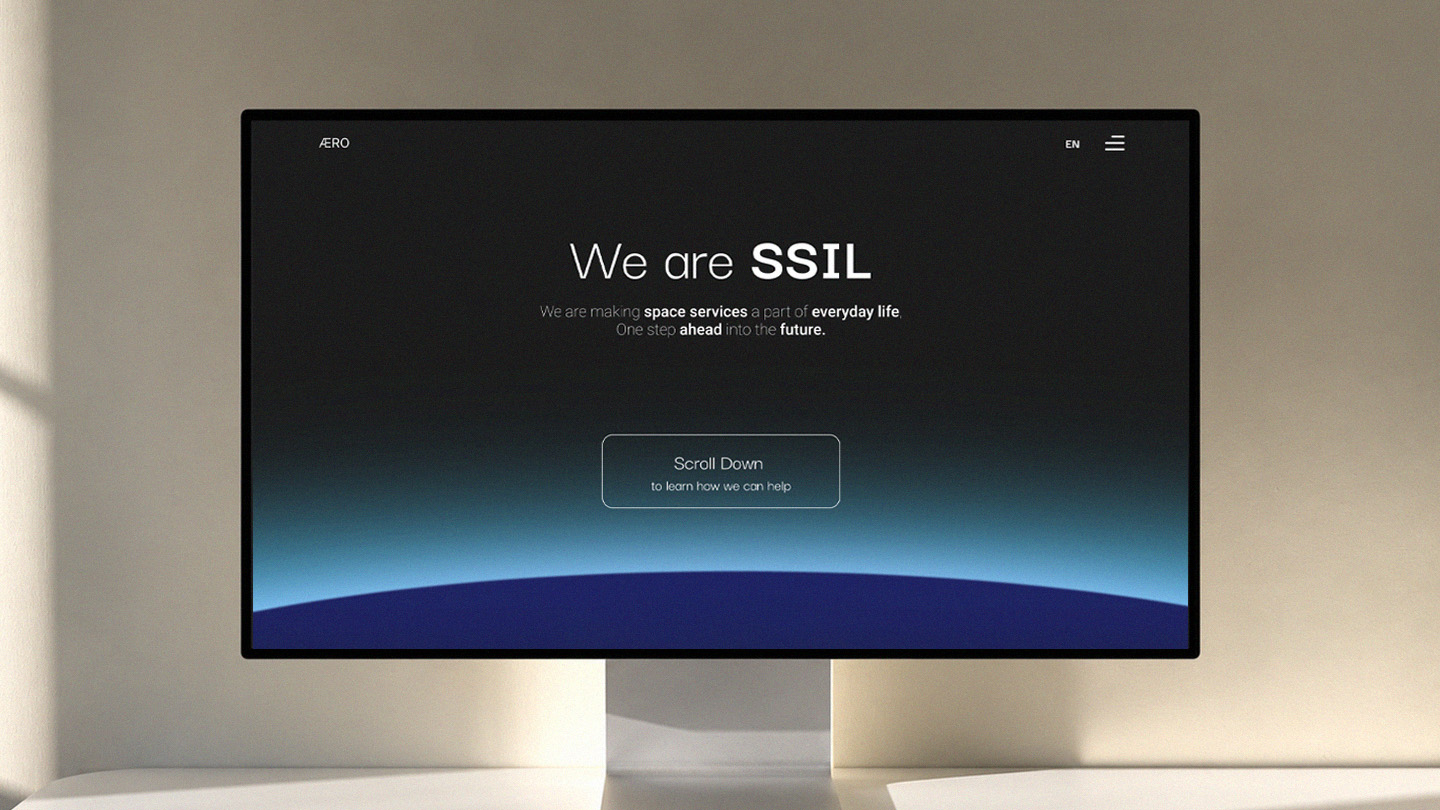
AERO SSIL website prototype displayed on a desktop monitor.

Making SSIL understandable and accessible internationally.

AERO was developed in 2025 for the Practice of System Design and Management course at Keio University, in collaboration with SSIL, a business cooperative based in Nihonbashi, Tokyo. SSIL connects space-focused research labs and start-ups with organisations outside the space sector.

The brief was open-ended: help SSIL gain international recognition, become discoverable by international clients, and promote Nihonbashi as a space-industry area.

Interviews with SSIL representatives revealed a challenge beyond promotion. Potential clients did not clearly recognise the value of space services, while the cooperative’s diverse capabilities and structure made early inquiry handling and project coordination difficult.

External · understanding the value

International clients needed a simpler way to understand what SSIL could offer and initiate an inquiry.

Internal · coordinating inquiries

SSIL needed a coordinated process for reviewing those inquiries and identifying relevant member capabilities.

One inquiry, multiple stakeholders.

We initially explored Nihonbashi broadly, then considered space tourism. Interviews with SSIL representatives redirected our focus towards how people understand the space industry and how SSIL could manage their interest. The concept shifted towards a service connecting external discovery with internal inquiry coordination.

Prospective clients

Understand the relevance of SSIL’s services, submit an inquiry, and receive clear communication about its progress and potential fit.

SSIL project managers

Collect and review inquiries centrally, coordinate the evaluation process, and understand members’ capabilities and availability.

SSIL members

Understand relevant inquiries, ask questions, communicate their capacity, and decide whether to participate.

Connecting discovery to structured project intake.

The public-facing experience introduces SSIL and space services, then guides interested visitors towards a structured inquiry. Internally, the inquiry enters a shared database and a staged review process involving project managers and relevant members.

The proposed architecture included an inquiry submission platform, an inquiry database, a project manager interface, a member interface, and a response and resolution process. The prototype used a Notion-based inquiry-management interface and AI-assisted summarisation and prioritisation to support request review.

Proposed service architecture
  1. 01

    Discover

    Understand SSIL and its offering.

    External · prospective client
  2. 02

    Submit

    Send a structured inquiry.

    External · prospective client
  3. 03

    Screen

    Project manager reviews the inquiry.

    Internal · SSIL
  4. 04

    Assess

    Relevant members communicate fit and capacity.

    Internal · SSIL
  5. 05

    Respond

    Project manager coordinates assessment and response.

    Internal · SSIL

Shared inquiry database supports internal review. AI assistance supports summarisation and prioritisation; project managers and members conduct the assessment. Subsequent match introduction was outside the system scope.

Turning the service concept into connected touchpoints.

All team members contributed to problem framing, concept development, and project direction. My primary responsibilities were UI/UX design and Figma prototyping of the website, integrating the service components, and verifying that the connected prototype worked as intended.

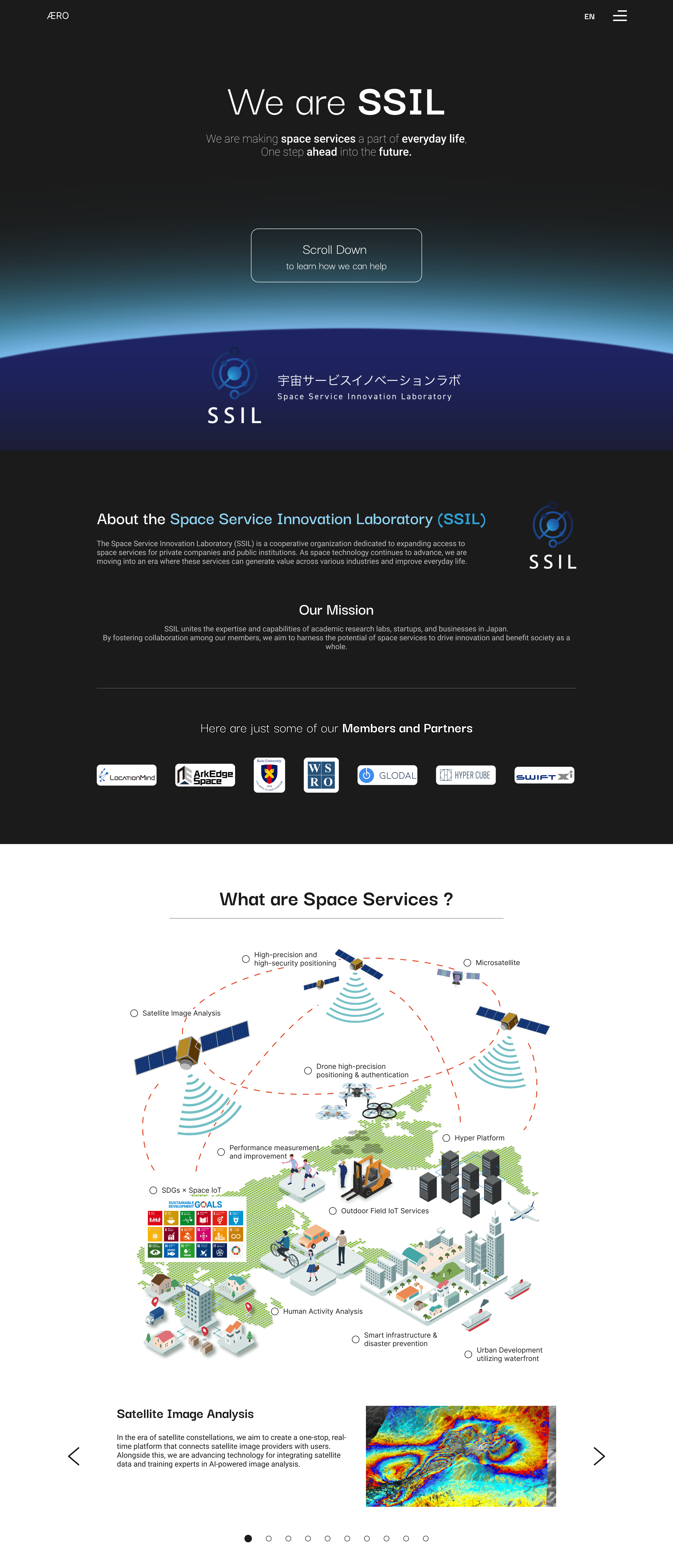
I designed the website experience in Figma to help visitors understand SSIL’s business model and offering, then find the inquiry pathway. I also worked on connecting the components into a coherent service flow and checking the prototype against the system requirements.

AERO Figma website design introducing SSIL, its members, and examples of space services.
My website design and Figma prototype — explaining the offering before the inquiry.Full size ↗

Scroll within the image to inspect details.

Interface evidence
  1. Explain before asking

    The website introduces SSIL and space services before guiding visitors towards contact. This responds to the understanding gap identified during problem framing.
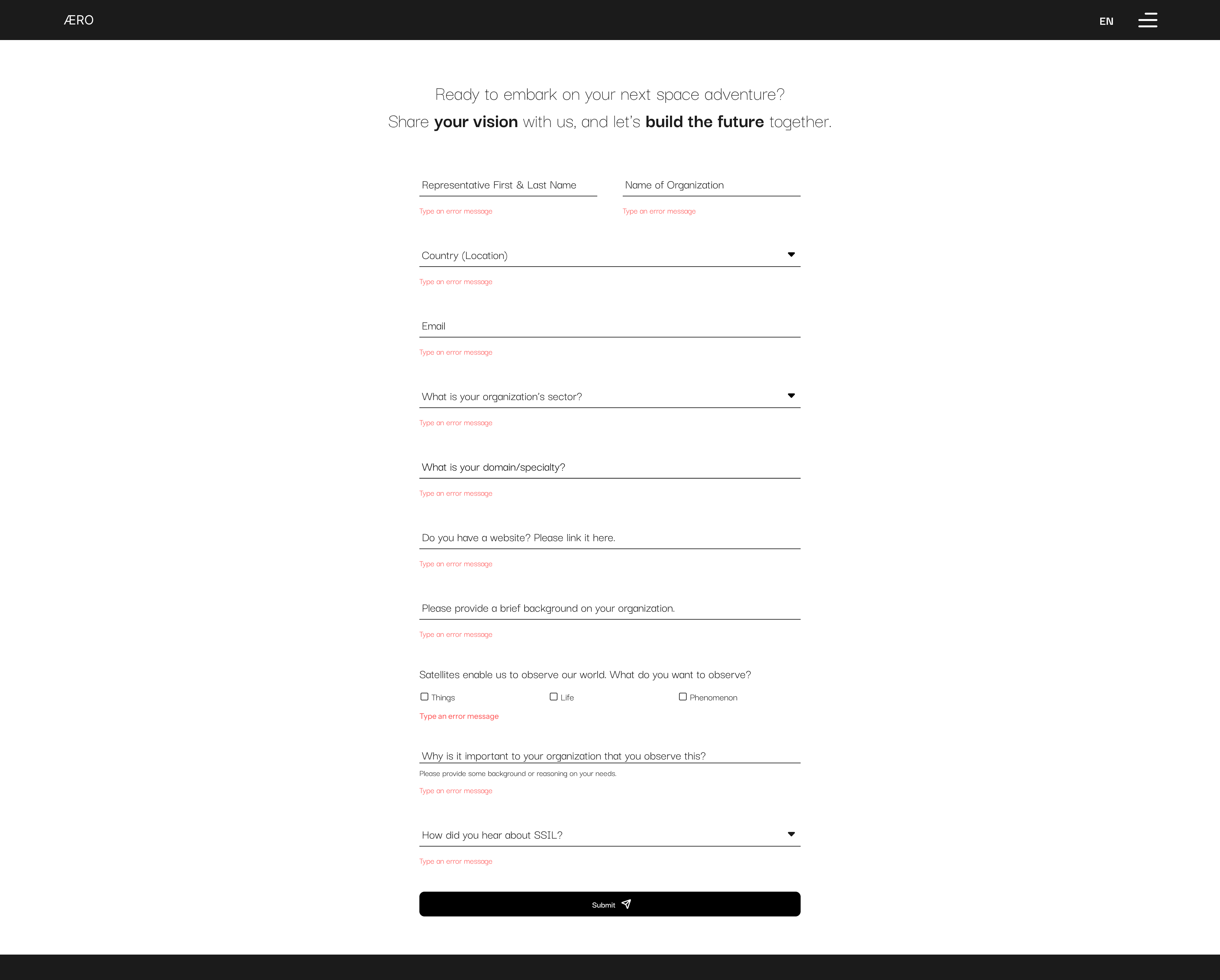
Team inquiry-form prototype collecting organisation details, sector, background, and satellite-service needs.
Team service touchpoint — structured inquiry input.Full size ↗

Scroll within the image to inspect details.

Connected intake
  1. Connect intake with review

    Structured input feeds into the database and review workflow so that the public interface has an operational counterpart.

  2. Stage access around review

    New inquiries remain initially under project manager control before member involvement. SSIL’s review supported this approach because unrestricted early contact from members could complicate coordination.

Clearer understanding. A continuing challenge of relevance.

Verification · does the prototype work?

The team verified more than half of the system’s functions using inspection, analysis, demonstration, and testing. All nine functions listed in the final verification table passed their reported checks, including inquiry input, notification, access, prescreening, and archiving. This demonstrated the tested functions rather than complete verification of the entire system.

External validation · understanding and relevance

The team surveyed more than 20 English-speaking professionals from non-space industries. Respondents generally perceived the landing page as internationally oriented, and a majority reported understanding space services. Many still struggled to identify an application relevant to their own industry.

SSIL validation · inquiry effort

SSIL reviewed a video demonstration and the Notion inquiry database. Feedback supported initial project manager control and described the database as intuitive. SSIL wanted more specific company and sector information, but questioned whether prospective clients would complete a lengthy form without sufficient motivation.

Outcome

The project delivered a connected service prototype, documented verification results, and validation findings from external professionals and SSIL. It demonstrated an approach to international discovery and inquiry coordination while identifying where the proposed service needed further development.

Reflection

Explaining space services was only the first step. Visitors also needed examples relevant to their own industry before recognising a reason to engage. A next iteration would prioritise targeted use cases and test how to gather useful inquiry information without imposing excessive effort.